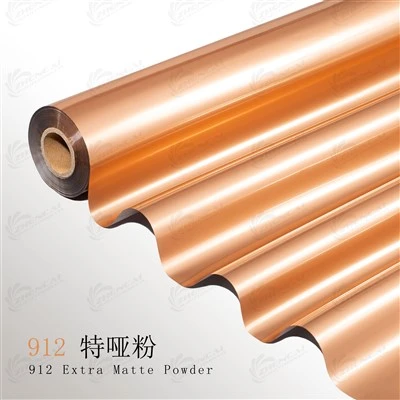


Security Hologram Foil for Anti-Counterfeit Packaging
Security hologram foil is a hot stamping and transfer film used to create tamper-resistant, visually verifiable packaging features on labels, cartons, certificates, and branded products. It is widely used by pharmaceutical, cosmetic, electronics, and luxury goods manufacturers.
Before ordering, buyers must confirm substrate compatibility (paper, plastic, coated board), required hologram pattern (standard vs custom logo/micro-text), stamping conditions, and whether the production line supports hot stamping or cold transfer foil.
1. What Security Hologram Foil Is and Where It Is Used
Security hologram foil is a specialized optical transfer material designed to create diffractive holographic effects and verification features on packaging surfaces. It is not decorative-only material; it is used as a functional anti-counterfeit layer in industrial printing.
Typical users:
Pharmaceutical packaging converters
Cosmetic brand packaging factories
Electronics label manufacturers
Government certificate printing suppliers
Luxury packaging producers
Security printing contractors
Before ordering from a security hologram foil manufacturer or supplier, buyers should confirm:
Substrate type (coated paper, PET, PVC, PP, cardboard)
Printing method (hot stamping or cold foil transfer)
Required security level (standard hologram vs custom micro-text pattern)
Machine compatibility and stamping conditions
2. Security Mechanism Types in Hologram Foil
Security hologram foil is not a single structure. It can be engineered in multiple layers depending on protection level.
| Security Feature Type | Description | Application Level |
|---|---|---|
| Standard holographic pattern | Pre-designed diffraction pattern | Low to medium security packaging |
| Custom logo hologram | Brand-specific visual identity | Brand protection |
| Micro-text hologram | Extremely small readable text under magnification | High security labels |
| Hidden image layer | Image visible only under angle/light change | Anti-counterfeit authentication |
| Serial number integration | Variable data stamping | Traceability systems |
| Kinetic movement effect | Visual shifting patterns | Luxury packaging security |
For bulk production, a custom security foil factory will usually require artwork files, security level definition, and test runs before mass manufacturing.
3. Material Compatibility and Application Scenarios
Security hologram foil must be matched with substrate chemistry and surface energy. Incorrect pairing is the main cause of adhesion failure.
| Substrate | Compatibility Level | Notes |
|---|---|---|
| Coated paper | High | Most stable for hot stamping |
| Uncoated paper | Medium | Requires temperature adjustment |
| PET plastic | High | Common for cosmetic bottles |
| PVC plastic | High | Good transfer clarity |
| PP plastic | Medium | Requires surface treatment |
| Laminated board | High | Used in luxury packaging |
Common application industries:
Pharmaceutical anti-counterfeit labels
Cosmetic jar seals and carton decoration
Electronic warranty stickers
Alcohol packaging security seals
Luxury brand authentication labels
Government and education certificates
Internal reference:
paper hot stamping foil and packaging-grade foil systems should be evaluated before switching to holographic structures for mass production.
4. Hot Stamping vs Cold Transfer for Security Foil
Security hologram foil can be applied through different industrial processes.
| Process Type | Equipment Requirement | Advantages | Limitations |
|---|---|---|---|
| Hot stamping foil | Heated die + pressure | Strong adhesion, durable finish | Requires tooling setup |
| Cold foil transfer | UV adhesive system | Fast, suitable for inline printing | Lower durability in abrasion-heavy use |
For security hologram foil wholesale procurement, hot stamping remains the most widely used method in packaging factories due to higher durability and clearer edge definition.
5. Key Technical Parameters Buyers Must Confirm
Before placing OEM or bulk order with a China security hologram foil supplier, procurement teams should define:
Substrate material and coating type
Required hologram design complexity
Roll width and roll length
Core size (standard or customized)
Stamping temperature range
Pressure and dwell time on production line
Machine type compatibility (manual / semi-auto / rotary)
Required MOQ and sample approval process
| Parameter | Why It Matters |
|---|---|
| Roll width | Affects die layout efficiency |
| Roll length | Impacts production downtime |
| Core size | Machine compatibility |
| Temperature range | Determines adhesion stability |
| Sample testing | Prevents batch failure risk |
6. Common Problems in Security Foil Production
Most production issues are not material defects but process mismatches.
| Problem | Root Cause | Solution |
|---|---|---|
| Foil peeling | Low temperature or poor substrate | Adjust heat and pressure |
| Blurred hologram edges | Excess pressure or unstable die | Optimize stamping settings |
| Weak adhesion | Incorrect coating or substrate | Pre-test surface energy |
| Color shift | Inconsistent foil batch | Request stable production batch |
| Transfer gaps | Uneven pressure distribution | Re-align stamping plate |
Buyers should always request sample testing before bulk order to validate real production conditions.
7. Supplier Evaluation Checklist
When selecting a security hologram foil manufacturer or factory, procurement teams should evaluate:
| Evaluation Item | Requirement |
|---|---|
| Production stability | Consistent batch-to-batch quality |
| Customization capability | Logo, micro-text, hidden patterns |
| Sample support | Fast and traceable testing process |
| MOQ flexibility | Suitable for pilot production |
| Lead time | Clear production schedule |
| Technical support | Process parameter guidance |
| Export experience | Packaging and logistics reliability |
A professional supplier should function not only as a vendor, but as a process consultant for stamping optimization.
8. Internal Link Suggestions
To support procurement decisions, buyers can review related categories:
[Security Foil] (anti-counterfeit foil systems overview)
security hologram foil (custom OEM product options)
cold foil for labels (inline printing applications)
hot stamping foil for packaging (standard industrial foil systems)
custom Pantone metallic foil (brand color matching solutions)
These internal resources help buyers compare security levels, substrate compatibility, and production methods before inquiry.
FAQ
Q1: Can I order samples before bulk production?
Q2: What information is required for quotation?
Q3: Can security hologram foil be customized with my logo?
Q4: What is the typical MOQ for custom security foil?
Q5: Why does foil peeling occur during production?
Q6: What packaging industries commonly use this foil?