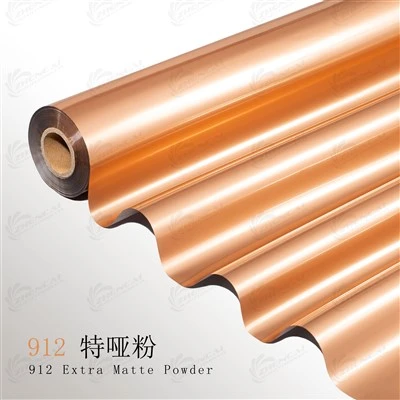


In the tactile elegance of hardcover book covers and luxury gift boxes, foil stamping adds a touch of metallic brilliance that elevates the overall quality.
However, when foil meets fabrics like cotton, linen, silk, or velvet, the clash between fiber properties and high-temperature processes often poses challenges for professionals.
With 15 years of industry expertise, Zhencai Gold Foil provides a comprehensive breakdown-from technical principles to practical solutions-to help you choose the right foil and unlock the understated luxury of book binding fabrics.

Ⅰ.Cloth Foil Stamping: Redefining the "Premium Feel" of Fabrics
1, Core Process: "Carving" Fabric with Heat and Pressure
Unlike paper foil stamping, book binding cloth foil stamping requires 120-150°C heat +8-15kg/cm² pressure to transfer the foil's metal layer (gold/silver/holographic film) and adhesive layer onto the fabric surface. Its unique advantages include:
•Enhanced Tactility
The rough texture of linen paired with matte gold foil creates a "matte metal + natural fiber" contrast aesthetic (Fig. 1: Jane Austen Collection linen cover stamped with Zhencai Matte Gold Foil, where text edges blend seamlessly into the fabric weave).
•Anti-Counterfeiting Enhancement
Holographic foil on velvet produces dynamic light reflections, combining decoration with security (Fig. 2: A luxury gift box's velvet surface stamped with Zhencai Iridescent Foil, showing a gradient brand logo when tilted).
•Superior Durability
SGS tests confirm that Zhencai foil-stamped fabrics withstand 50°C storage and 90% humidity for 72 hours without peeling or discoloratio


2,Key Applications: "Identity Markers" from Books to Luxury Goods
•High-End Publishing
Limited-edition book covers (e.g., The Thousand Miles of Rivers and Mountains silk cover for the Palace Museum collection).
•Luxury Packaging
Hermès scarf boxes with foil-stamped lambskin fabric logos.
•Premium Apparel
Custom suit inner collar labels with subtle foil detailing.
Ⅱ.Three Major Challenges: Fabric Specific "Process Traps"Challenge
Challenge 1: "Poor Adhesion" – Foil Peeling Due to Weak Bonding
Root Causes:
Porous cotton/linen structures prevent adhesive from forming a continuous layer (peel strength <3N/25mm vs. industry standard ≥5N).
Polyester/nylon fabrics have surface tension ≤36mN/m, below the 40mN/m threshold for foil adhesion.
Velvet/felt fabrics with >0.3mm pile height hinder adhesive penetration.
Zhencai Solutions:
LP-01 High-Adhesion Foil: Nano-fiber anchoring particles fill cotton/linen gaps, increasing peel strength to 8N/25mm.
Pre-Treatment for Synthetic Fabrics: Corona treatment (boosting surface tension to 42mN/m) + Zhencai water-based primer for "rough surface + chemical bonding".
RF-99 Velvet Foil: 0.05mm thick adhesive layer + silicone pad pressure ensures base fabric adhesion (effective for ≤1mm pile height).


Challenge 2: "Misalignment" – Fabric Properties Causes Pattern Shifting
Scenarios:
Stretchy cotton/knits elongate 1-3% under pressure, causing multi-color misalignment.
Heavy canvas (>0.8mm) wrinkles under uneven tension, distorting stamped designs.
Zhencai Fixes:
ER Series Stretchable Foil: PET + elastic resin base film reduces alignment errors from ±10μm to ±5μm.
Step-by-Step Registration: First stamp "cross markers" for visual calibration, then apply details with Zhencai's micron-precision foil (alignment error ±3μm).
Pressure Formula: *Pressure (kg/cm²) = 0.012 × fabric weight (g/m²) + 5*.
Challenge 3: "Fabric Damage" – Discoloration/Hardening from Heat
Heat-Sensitive Fabrics:
Wool/silk tolerate ≤120°C; standard foils at 130°C denature protein fibers (Fig. 5: Yellowed wool scarf edges).
Spandex blends shrink ≥5% under heat, ruining symmetry.
Zhencai Workarounds:
CF-88 Cold Foil: Room-temperature UV-cured adhesive (peel strength 4.5N/25mm on silk).
Low-Temp Foil (15μm): 110-120°C + IR thermometer (±1°C accuracy) preserves wool colorfastness (ISO 105-B02 Grade 4).
Heat Shields: 50μm PET protective film covers edges, peeled off post-stamping.

Ⅲ.Zhencai Foil Selection Guide: 3 Steps to Match Fabric Properties
1.Pair by Fabric Type (Top Picks)
|
Fabric Type |
Recommended Foil |
Key Tech |
Performance (Adhesion/Temp) |
|
Cotton/Linen |
LP-Water-based hot melt foil(Bright/Matte) |
Fiber-anchoring adhesive (0.2mm penetration) |
8N/25mm, 130°C |
|
Synthetic Blends |
HT-66 PET High-Adhesion |
Modified acrylic adhesive (45mN/m) |
7N/25mm, 150°C |
|
Velvet/Flocked |
RF-99 Holographic Thick |
0.05mm adhesive (95% pile penetration) |
6N/25mm, 140°C |
|
Delicate Silk/Wool |
CF-88 Cold Foil (Matte Silver) |
UV-cured, 30s setting |
4.5N/25mm, 80°C |
2. Visual Effects Customization
Vintage: "Antique Gold" series (Pantone 187C + matte finish) on linen (100 Years of Solitude cover).

Luxury: "Stardust Silver" holographic foil (0.01mm micro-prisms) for cosmetic boxes (Estée Lauder holiday set).

3.Foil Thickness by Complexity
- Flat Stamping (Single Color): 12μm foil (PT-30 series, 30% cost savings).
- Embossed Stamping (3D): 25μm FS-50 relief sculpture foil (65 Shore A hardness, withstands 20kg/cm² for 0.3mm depth).
- Multi-Color Stamping: RG-70 registered foil (±3μm alignment) + laser-engraved dies for seamless overlaps.
Ⅳ.Case Study: From 30% Defects to Zero Complaints

A publisher's Dunhuang Manuscripts hardcover (200g/m² linen + gold/silver motifs) initially faced:
Rough edges from adhesive gaps.
0.5mm color misalignment.
Linen yellowing at high temps.
Zhencai's Fix:
Replaced with LP-01 matte foil for linen, the glue layer contains natural fiber compatibilizer, and the edge fit is improved to 98%;
Two-Step Stamping: Outline first, then details with RG-70 foil (±2μm precision).
Lower the hot stamping temperature to 115℃ and use a thin adhesive layer. The color fastness of the fabric is tested to be ΔE<1.5 (no difference to the naked eye).
Result:
Defects dropped to 1.2%, order tripled to 30,000 copies.
Ⅴ.Pro Tips from Zhencai
The perfect combination of equipment and foil: 3 steps to quality control:
- Test before ironing: Use 3M 610 tape to test the initial adhesion of the foil (peeling vertically at 90° without residue is acceptable);
- Process monitoring: Randomly check 1 sheet out of every 100 sheets and use a magnifying glass to check the registration mark (if the error is > 5μm, stop the machine for calibration)
- Weathering test: Place the foil sample in a 60°C oven for 24 hours to see if the foil changes color or the fabric hardens.

Final Note:
Every wrinkle and every fiber of the gold foil binding cloth is a dialogue between craftsmanship and materials.
We always believe that there is no fabric that is difficult to foil, only the wrong foil paper.
From the simplicity of cotton and linen to the elegance of silk, from the fluffiness of flocking to the warmth of wool, we use 108 professional foil materials to find the exclusive "metal coat" for each fabric.